Related Guide
How Do Dual Motor Electric Bikes Climb Steep Gravel Hills?
Two hub motors change where drive force lands on a steep gravel climb, and that split is what riders actually feel.
Read article
Terrain, not top speed, decides how a fat tire electric bike actually feels. Loose sand, sharp gravel, steep climbs and long descents each reward a different tire pressure, motor mode and braking habit, so this guide maps every surface to a concrete setup. If you already ride a fat tire ebike off-road, the same rules apply — and the SUFUL C01 is specified around them.
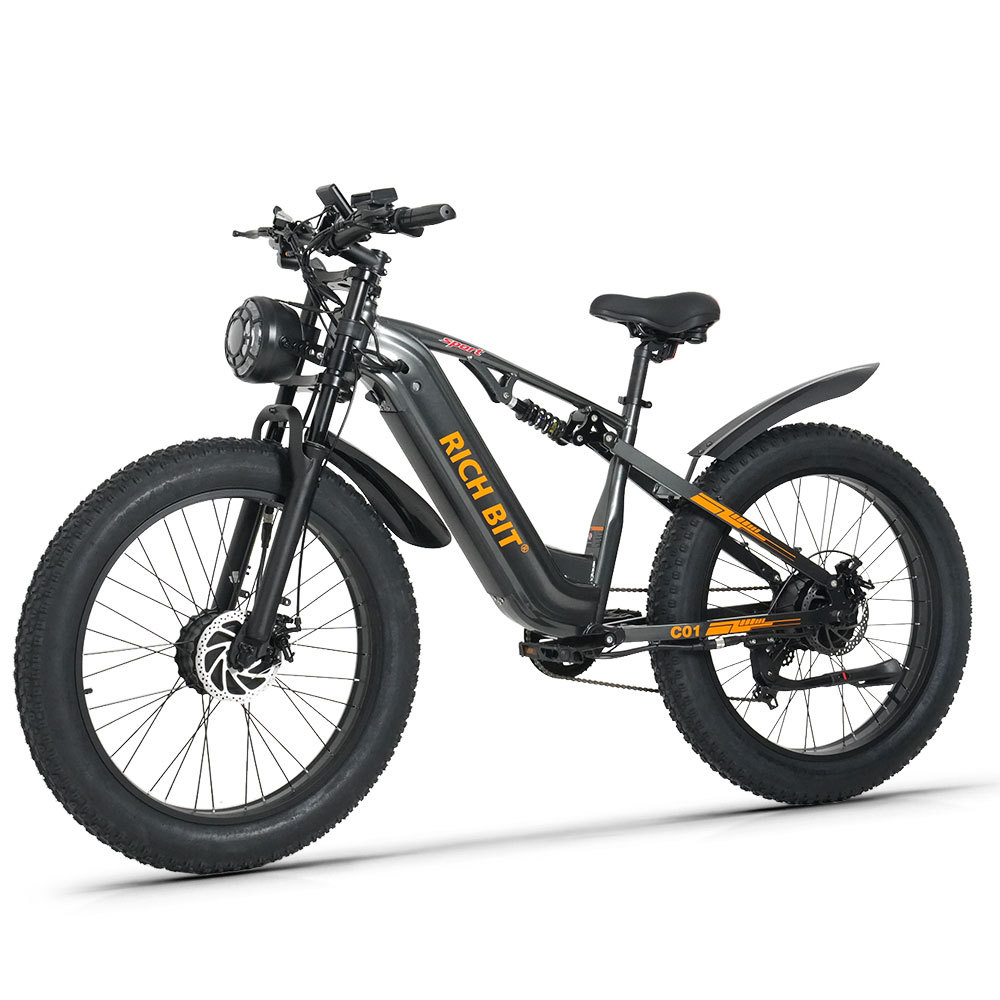
Read the row that matches your ride, then open the deeper module for the reasoning behind it.
| Terrain | Tire pressure focus | Motor mode | Braking technique | Rider & load note | C01 spec to check |
|---|---|---|---|---|---|
| Sand & loose | Lower the pressure in small steps for a wider footprint; stop before the sidewall squirms. | Both motors engaged, steady momentum instead of hard acceleration. | Brake gently and in a straight line; avoid sudden steering corrections. | Shift weight back and keep pedalling input smooth. | 26" × 4.0 tires |
| Gravel & uneven trails | Moderate pressure so the tire absorbs embedded rock without risking rim contact. | Dual motors for traction on loose climbs and rolling gravel. | Brake earlier than on pavement and release gradually into the corner. | Keep the total rider-plus-cargo figure inside the frame limit. | 1270 mm wheelbase, 150 kg payload |
| Steep climbs | Moderate to firm — too soft wastes energy as the tire squirms under load. | Rear and front 1000W motors with pedal input, not throttle-only. | Do not brake mid-climb; if you must stop, restart straight and low. | Lighter riders climb easier; check the rated maximum before planning a route. | 25° max climbing degree, 48V18Ah battery |
| Long descents | Keep your gravel or trail pressure; no need to change for packed descents. | Low or no assist — save battery and keep the motor out of the equation. | Alternate front and rear hydraulic disc brakes rather than one long pull. | A 41 kg bike carries momentum, so plan a longer stopping distance. | Front and rear hydraulic disc brakes, 170 mm rear travel |
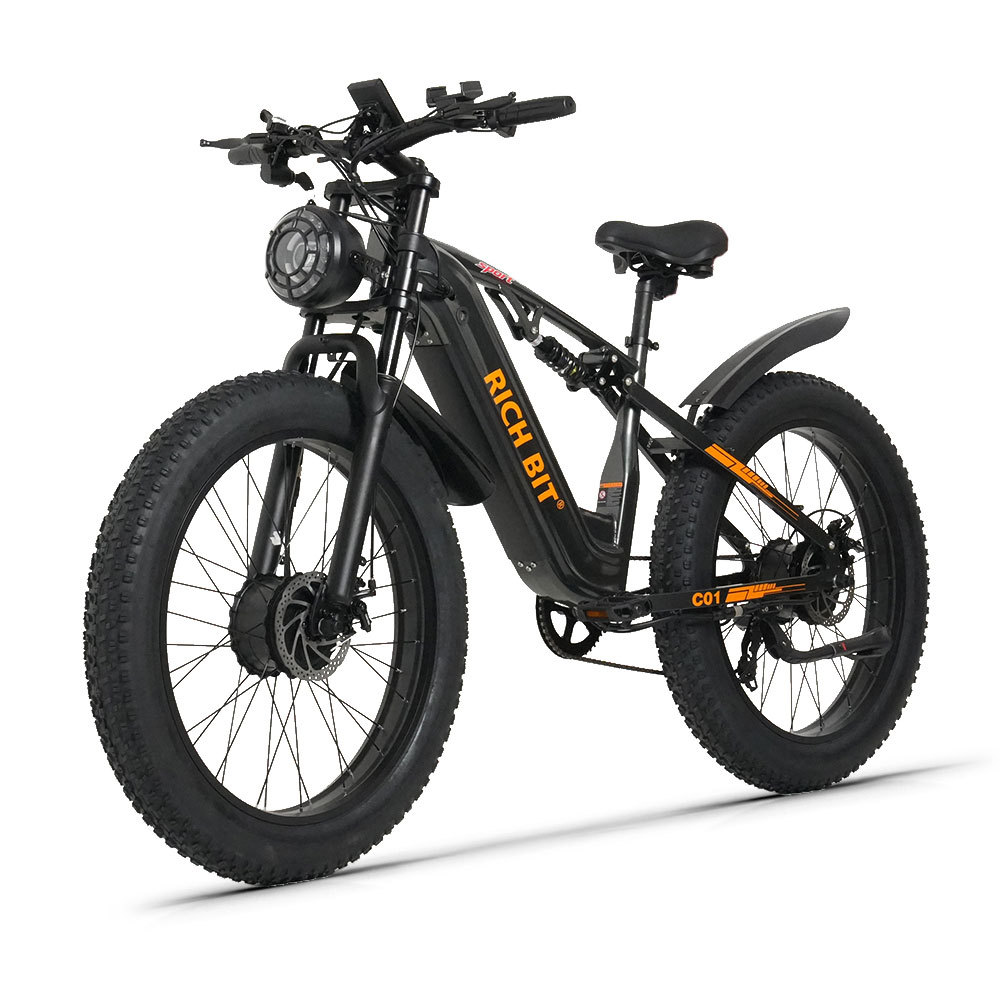
Loose ground punishes narrow tires. The C01 runs 26" × 4.0 tires, and the product page states traction on roads, sand, gravel and uneven terrain — the width spreads your weight across a larger contact patch instead of cutting into the surface.
The practical trade-off is simple: a wider, softer tire floats better on sand but rolls heavier on pavement. That is why the C01 uses the same tire across all conditions and asks you to manage pressure instead of swapping wheels.
Start at the pressure you already trust on packed ground, then lower it in small steps until the tire stops digging in. Stop before the sidewall sags visibly or the rim risks contacting the ground, and never go below the minimum printed on the tire sidewall.
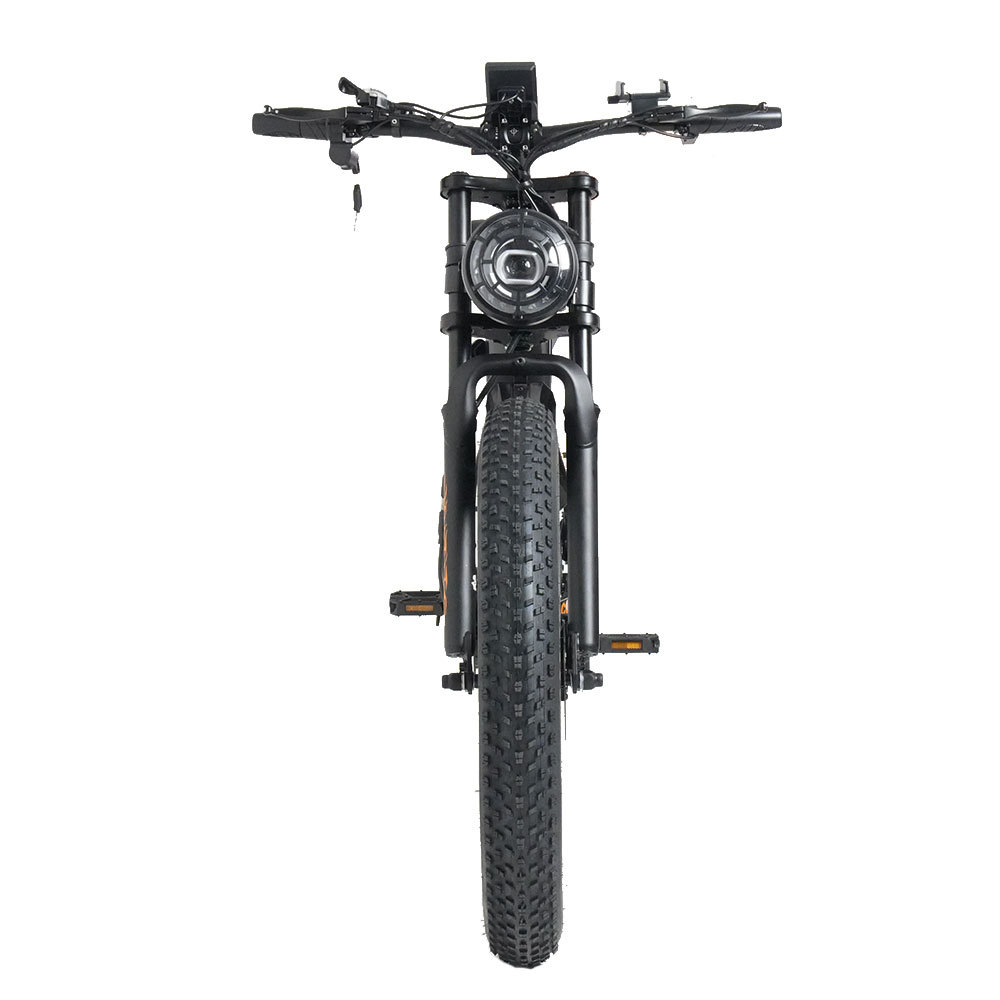
On gravel the question is not grip alone, it is stability. The C01 uses a 1270 mm wheelbase measured from the centre of the front wheel to the centre of the rear wheel, which is long for an off-road fat tire ebike and is what keeps the bike settled when the surface keeps changing under you.
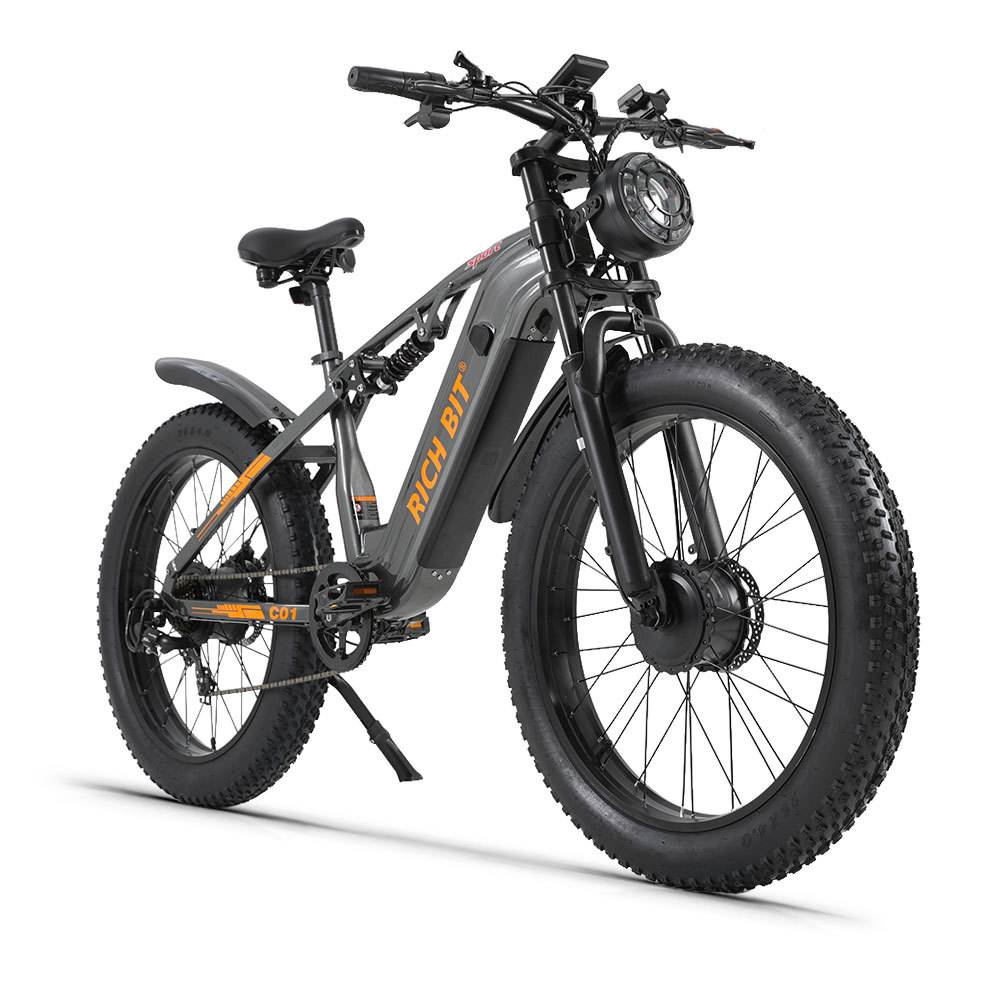
The C01 pairs a 1000W front motor with a 1000W rear motor and the product page rates the maximum climbing degree at 25°, drawing on a 48V18Ah battery. Two driven wheels matter most on loose, steep gravel, where a single driven wheel can spin before you reach the top.
Bar lengths are a relative illustration of climbing effort, not a measured gradient. The only rated figure is the 25° maximum climbing degree listed on the product page.
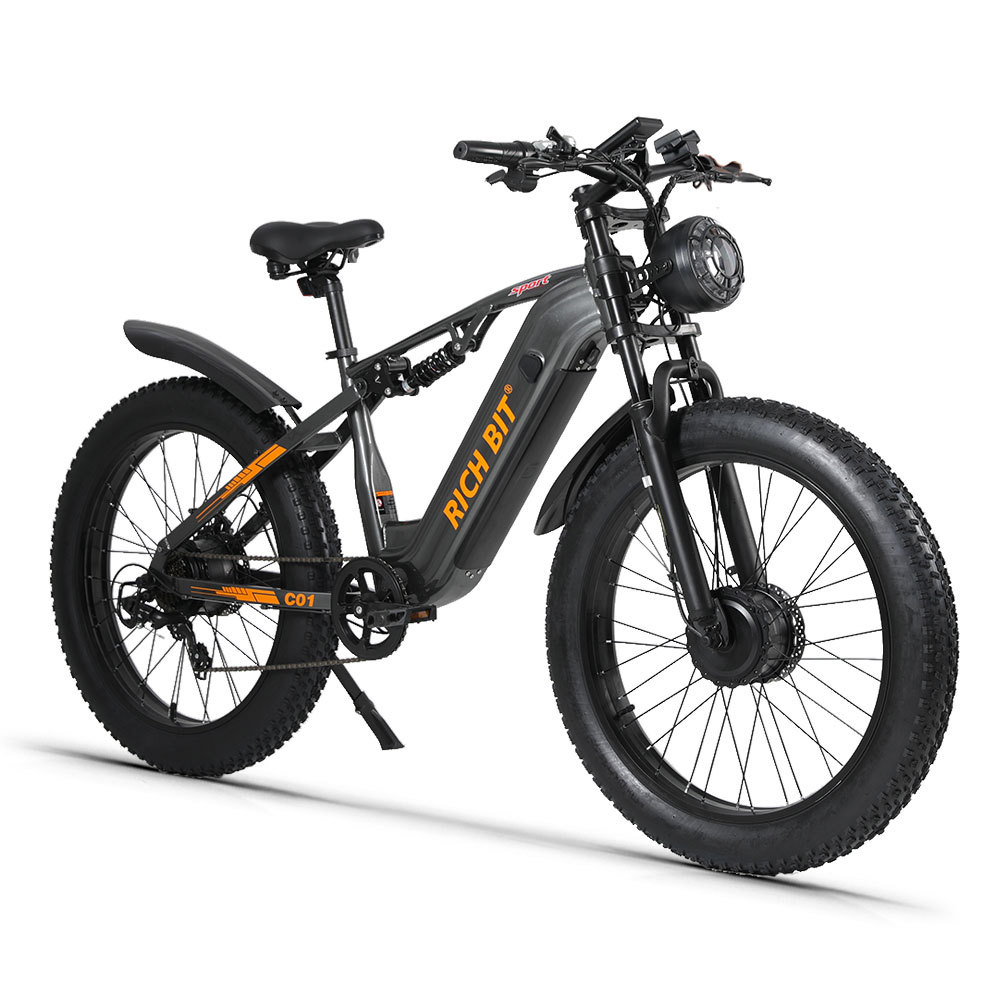
Descents are where a heavy fat tire ebike asks for discipline. The C01 uses front and rear hydraulic disc brakes and a rear suspension with 170 mm travel, and it weighs 41 kg net — roughly the weight of two city bikes, all of it wanting to keep moving downhill.
Progressive pressure from the top of the descent beats one late grab at the bottom.
Share the work between the front and rear hydraulic discs so neither overheats on a long run.
Slide back on steep pitches to keep the front wheel from washing out under braking.
170 mm of rear travel keeps the tire loaded on rocky descents, which is where braking grip comes from.
Decide your entry speed before the corner, not in the middle of it.
Confirm lever feel, pad wear and rotor condition before any long or loaded descent.
If you ride the same bike on pavement, gravel and loose trail in one trip, work through these checks once per trip instead of re-tuning between surfaces.
Tune for the softest ground you expect; the tire will simply roll a little heavier on the hard sections.
The frame supports up to 150 kg including riders and cargo, so weigh bags and racks before a loaded ride.
The listed maximum range is 65–70 km per charge. Sand, steep climbs, a heavier rider and cold weather all reduce it.
Charging time is approximately 5–6 hours with the 48V 3A, AC220V-50Hz charger.
The C01 uses an LED display; confirm battery level and assist setting at the start, not halfway up a climb.
Two minutes of lever and travel checks before a long descent is cheaper than a trailside repair.
Every figure below comes from the SUFUL C01 product page and covers the components that decide how the bike behaves once the surface changes.
| Model / SKU | SUFUL C01 — EU-C01 |
|---|---|
| Motor | Front 1000W and rear 1000W dual motors |
| Battery | 48V18Ah |
| Max speed | 60 km/h with dual motors |
| Max range | 65–70 km per charge |
| Tires | 26" × 4.0 fat tires |
| Brakes | Front and rear hydraulic disc brakes |
| Rear suspension | 170 mm travel |
| Max climbing degree | 25° |
| Payload | Frame supports up to 150 kg (riders and cargo) |
| Net / gross weight | 41 kg net, 46 kg gross |
| Wheelbase | 1270 mm, centre of front wheel to centre of rear wheel |
| Charging | Approximately 5–6 hrs with the 48V 3A, AC220V-50Hz charger |
| Display | LED |
| Protection | Overcurrent 50±1A; under-voltage 42V±0.5V |
| Listed price | $1,045.00 — confirm current pricing on the product page |
| Delivery | Select regions of Europe only; delivery to the UK and Nordic countries is not available |
Buying one bike for your own terrain and buying for a fleet or dealership need different conversations. Send us the details and we will confirm configuration, delivery area and lead time for your order.
the product page lists 26" × 4.0 tires and states traction on roads, sand, gravel and uneven terrain. the width creates a large contact patch on loose ground, and the same tire still rolls on pavement, so one bike covers mixed routes without a wheel swap.
the c01 uses a 1000w front motor and a 1000w rear motor, and the page rates the maximum climbing degree at 25°. two driven wheels put power down from both ends of the bike, which helps most on loose, steep gravel where a single driven wheel can slip.
maximum range is listed at 65–70 km with a 48v18ah battery, charged in roughly 5–6 hours with the supplied 48v 3a charger. real distance depends on terrain, assist level, speed, and the combined weight of rider and cargo.
the frame supports up to 150 kg including riders and cargo. the bike itself weighs 41 kg net and 46 kg gross, so plan your total load before adding panniers, racks or extra equipment.
front and rear hydraulic disc brakes plus a rear suspension with 170 mm travel. at 41 kg the bike carries real momentum downhill, so brake early and progressively instead of relying on one hard pull.
the product page states that delivery is currently supported only in select regions of europe, and that delivery to the uk and nordic countries is not available. contact support to confirm whether your area is covered before ordering.
Copyright © 2026 SUFUL Co. Ltd All Rights Reserved.


